The Decision That Changes Everything
Most people start the pool planning process with a picture in their head. A specific shape, a certain size, something they saw in a magazine or a neighbor’s yard. That inspiration is a great starting point. But the pool that works best for your family is not always the one that looks best in someone else’s backyard.
Shape and size are the two decisions that affect everything downstream: how the pool fits your yard, how your family uses it, what it costs to build, and what it costs to maintain for the next twenty years. Get them right and the pool feels like it was always supposed to be there. Get them wrong and the space never quite works the way you imagined.
This is one of the first conversations we have with every client at Dallas Cool Pools. Here is how to think through it.
Start With the Space You Actually Have
Measure Before You Dream
Before you fall in love with a design, get a clear picture of your actual buildable space. How much usable area do you have after accounting for local setbacks, utility lines, and existing structures? Many homeowners are surprised by how much a backyard shrinks once you factor in required distances from the home, fence lines, and property boundaries.
A professional site assessment, which is part of every project we take on, maps out exactly what is possible before you invest emotionally in a design that will not fit.
Think About the Whole Backyard, Not Just the Pool
A pool that fills every inch of available space is not a well-designed backyard. The best outdoor spaces leave room for a patio or deck, some landscaping, and areas where people can gather outside of the water. Think about how you want the full space to feel, not just the pool in isolation.
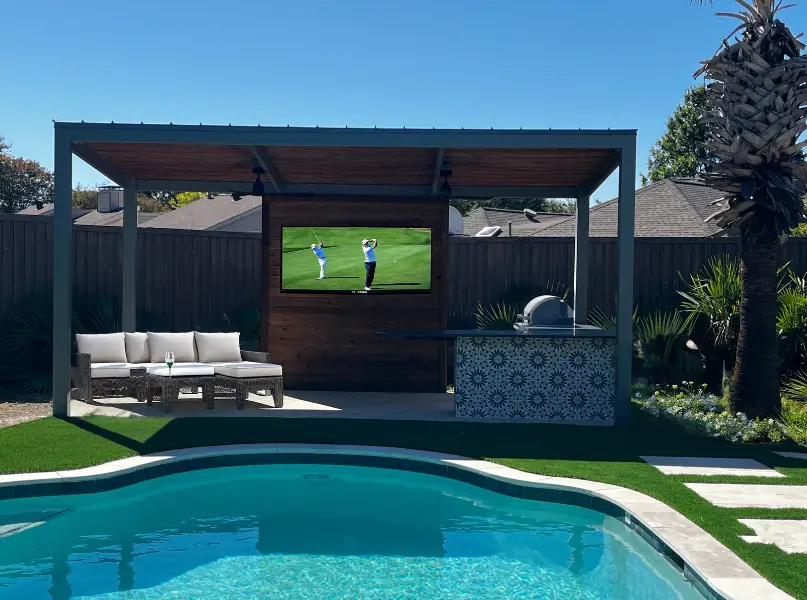
If you have future plans for an outdoor kitchen, a covered patio, or a fire feature, now is the time to account for that. Adding those elements later becomes significantly more complicated and expensive when the pool has already been built around them.
Pool Shapes: What Each Style Offers
Rectangular
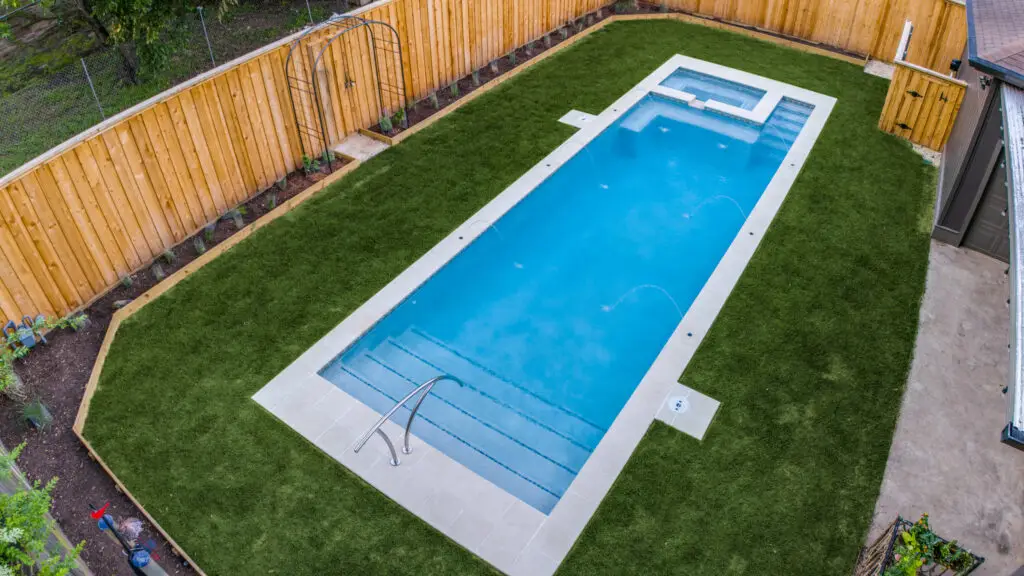
The classic choice, and for good reason. Rectangular pools are clean, timeless, and highly functional. They maximize usable water space, work well for lap swimming and active play, and pair naturally with modern and transitional home architecture. If you entertain frequently or have kids who love open water, a rectangle gives you the most room for the footprint.
Freeform
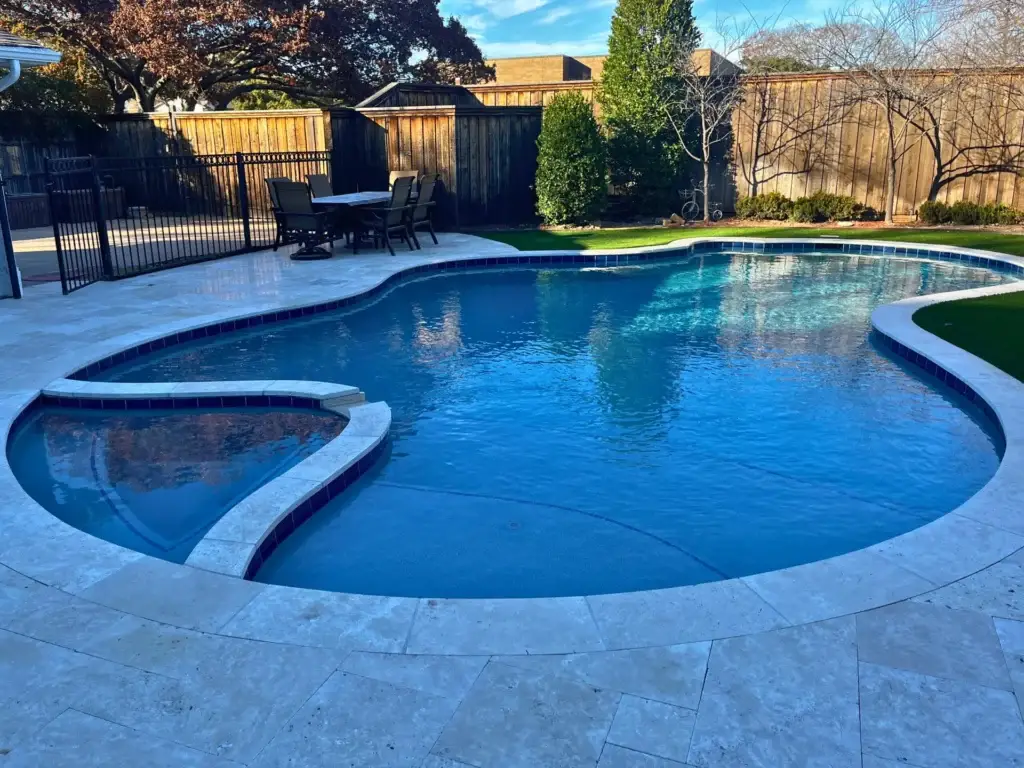
Freeform pools use organic, curving shapes that feel more natural and resort-like. They work beautifully in yards with landscaping, trees, or irregular boundaries where a geometric shape would feel forced. If the goal is a backyard that feels like an escape rather than a sports facility, freeform tends to be the better fit.
L-Shaped
L-shaped pools are a smart solution when you want the pool to serve two purposes at once. One section can be used for lap swimming or active play while the other creates a calmer zone for a tanning shelf, a spa, or a lounge area. They work particularly well on longer lots where a straight rectangle would feel narrow.
Geometric
Geometric pools go beyond the rectangle with shapes like octagons, trapezoids, or custom multi-angle designs. They offer a more architectural look and function well as a visual focal point in the backyard. If design and aesthetics are a high priority, geometric shapes give you the most creative flexibility within a structured form.
Pools With Integrated Features
Many clients choose to incorporate features like a spa, tanning ledge, or a water feature directly into the pool design. These are not just upgrades, they fundamentally change how a pool is used and experienced. A tanning ledge turns a pool into an all-day destination. An integrated spa extends the season. These elements can be incorporated into almost any shape and are worth considering early in the design process.
Pool Size: Bigger Is Not Always Better
Match Size to How You Will Actually Use It
One of the most common mistakes we see is homeowners building a pool that is larger than their lifestyle requires. A pool that dominates the backyard leaves no room for the surrounding elements that make outdoor living enjoyable. It also costs more to heat, clean, and maintain every year.
Before settling on a size, be specific about how you plan to use the pool. Is it primarily for lap swimming? Family recreation? Quiet relaxation? Entertaining guests? Your answer should guide the size decision more than any other factor.
General Size Ranges as a Starting Point
While every project is custom, here are the general ranges we build most often:
- Plunge or small pools: under 200 square feet, ideal for compact lots or a more intimate experience
- Mid-size pools: 200 to 400 square feet, suitable for most family backyards
- Larger pools: 400 to 600 square feet, well suited for active use and regular entertaining
- Resort-style pools: 600 square feet and up, for expansive lots with a full outdoor living vision
Leave Room for the Rest of the Experience
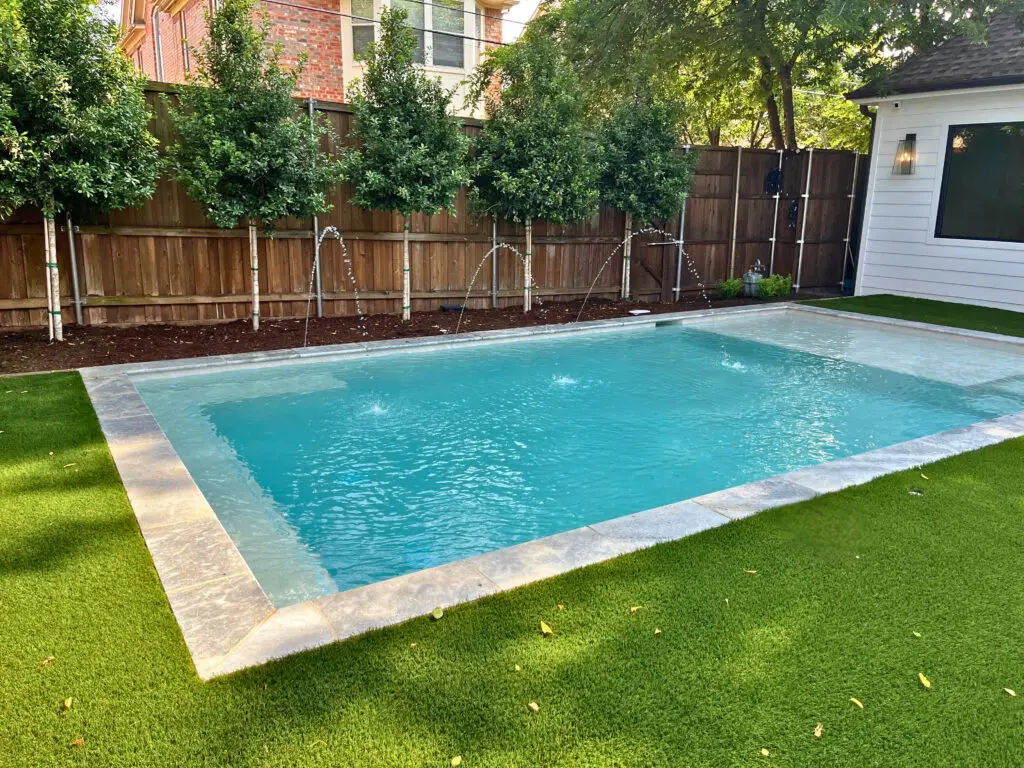
The backyards that feel the most complete are the ones where the pool is one part of a larger design, not the entire backyard. A well-proportioned pool surrounded by thoughtful outdoor living space almost always looks and functions better than a pool that occupies every available square foot.
Practical Considerations for Dallas Homeowners
Permits and Local Requirements
Pool construction in Dallas requires permits, and local requirements vary by city. Setbacks, fencing rules, and inspection processes are part of every build. At Dallas Cool Pools, we handle permit coordination as part of our process so our clients are never navigating that alone.
Soil Conditions
North Texas soil, particularly the expansive clay common across the Dallas area, shifts seasonally with moisture changes. This directly affects how a pool is engineered and reinforced. Proper drainage planning and structural design are critical elements of every project we build.
HOA Guidelines
Many Dallas neighborhoods have HOA rules that influence pool placement, fencing requirements, and sometimes material or aesthetic choices. Review your HOA guidelines early in the process and submit for approval before finalizing your design to avoid costly delays. We assist homeowners in this process and provide any documentation requested by the HOA.
Frequently Asked Questions
What pool shape is most popular in Dallas?
Rectangular and freeform pools are both very common. Rectangular designs appeal to homeowners who want a clean, modern look or plan to use the pool for lap swimming. Freeform designs are popular with homeowners who want a more natural, resort-style feel. The best shape depends on your yard, your home’s architecture, and how you plan to use the space.
How small can a pool be and still be worth building?
Smaller pools, sometimes called plunge pools, can be very worthwhile depending on your intended use. They are ideal for cooling off, hydrotherapy, or simply having a water feature in a compact backyard. They cost less to build, heat, and maintain, although there are minimum thresholds in gunite and excavation. If your lot is small or your primary goal is relaxation rather than active swimming, a smaller pool may be the smarter choice.
How much space should I leave around the pool?
A general rule is at least three to four feet of deck space around all sides for safety and usability. Beyond that, the amount of surrounding space depends on how you plan to use the area. If you want outdoor furniture, a dining area, or room for guests to gather, plan for significantly more. We help every client think through the full backyard layout, not just the pool footprint.
Can I add a spa or tanning ledge to any pool shape?
In most cases, yes. Spas, tanning ledges, and water features can be incorporated into almost any pool shape. The key is planning for them early. Adding these features after a pool has been designed or built is more complicated and more expensive. When we sit down with a client, we always ask about these elements upfront so the design accommodates them from the start.
Final Thoughts
The right pool shape and size is not about what looks best in a photo. It is about what works best for your family, your yard, and the way you actually live. A pool designed around your life will give you decades of enjoyment.
At Dallas Cool Pools, every project starts with understanding the homeowner first. If you are ready to start the conversation, we would love to help you figure out exactly what fits.
Contact Dallas Cool Pools today for your free backyard consultation.