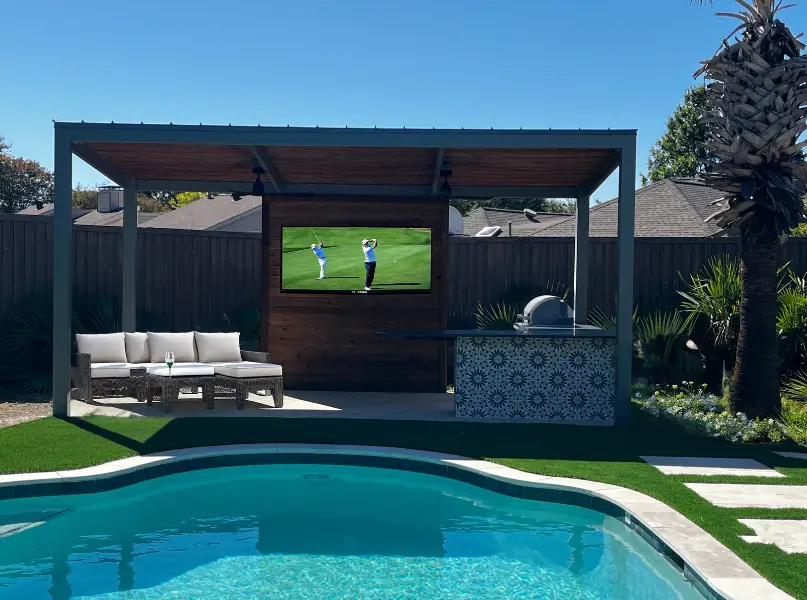
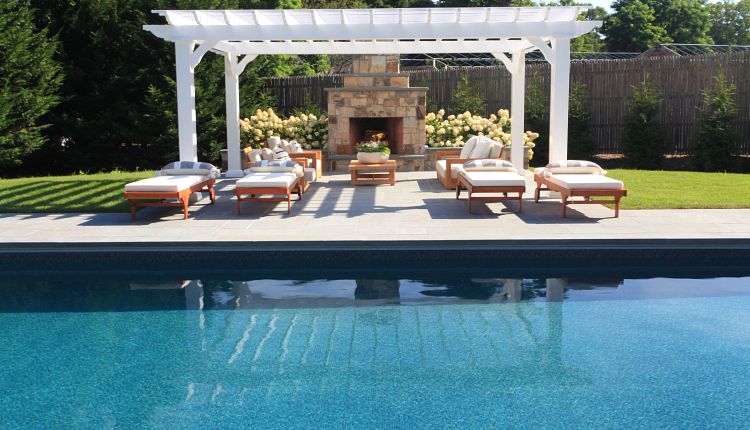
A Pool Is the Beginning, Not the Finish Line
The backyards that people remember are not defined by the pool alone. They are defined by the full experience: the shade that makes a July afternoon comfortable, the fire feature that keeps everyone outside after sunset, the outdoor kitchen that means nobody has to go inside during a gathering. The pool is the centerpiece, but the space around it determines whether the backyard actually gets used.
In Dallas, where summers are long and the sun is relentless, designing the full outdoor living environment is not a luxury consideration. It is a practical one. At Dallas Cool Pools, we design and build complete backyard transformations. Here is how to think about the elements that make a backyard truly finished.
Why Shade Is Non-Negotiable in Dallas
The Reality of a Texas Summer
Dallas summers regularly bring weeks of 100-degree-plus temperatures and intense sun from mid-morning through late afternoon. Without shade, pool decks become too hot to walk on barefoot, patio furniture sits unused for hours at a time, and the window of comfortable outdoor time shrinks considerably.
Thoughtful shade design does not just make your backyard more comfortable. It fundamentally changes how much of the day you can actually use it.
Shade Protects Your Investment
Prolonged sun exposure fades patio furniture, damages wood surfaces, and accelerates wear on pool finishes and equipment. A well-placed shade structure is both a comfort upgrade and a protective measure for everything you have already invested in the outdoor space.
Pergolas: Style & Structure
What a Pergola Adds
A pergola is one of the most versatile outdoor living additions you can make alongside a pool. It provides partial shade, defines a living zone within the backyard, and adds architectural character that makes the space feel intentional and designed. A pergola adjacent to a pool creates a natural transition between the water and the lounging or dining area, and that transition is what makes a backyard feel complete rather than like a collection of separate elements.
Material Considerations
Pergolas can be constructed from wood, aluminum, or vinyl. Traditional wood delivers beautiful warmth and a timeless, natural look, but in the Texas climate it requires consistent maintenance to protect against heat, moisture, and sun exposure. Aluminum and vinyl are engineered to resist warping, cracking, and fading while requiring far less upkeep over time.
At Dallas Cool Pools, we build our structures using aluminum posts wrapped in cedar veneer — giving you the strength and durability of aluminum with the rich, authentic appearance of real cedar. It’s the best of both worlds: long-term performance with a warm, elevated aesthetic.
Covered Patios: Full Protection Year-Round
When You Need More Than Filtered Shade
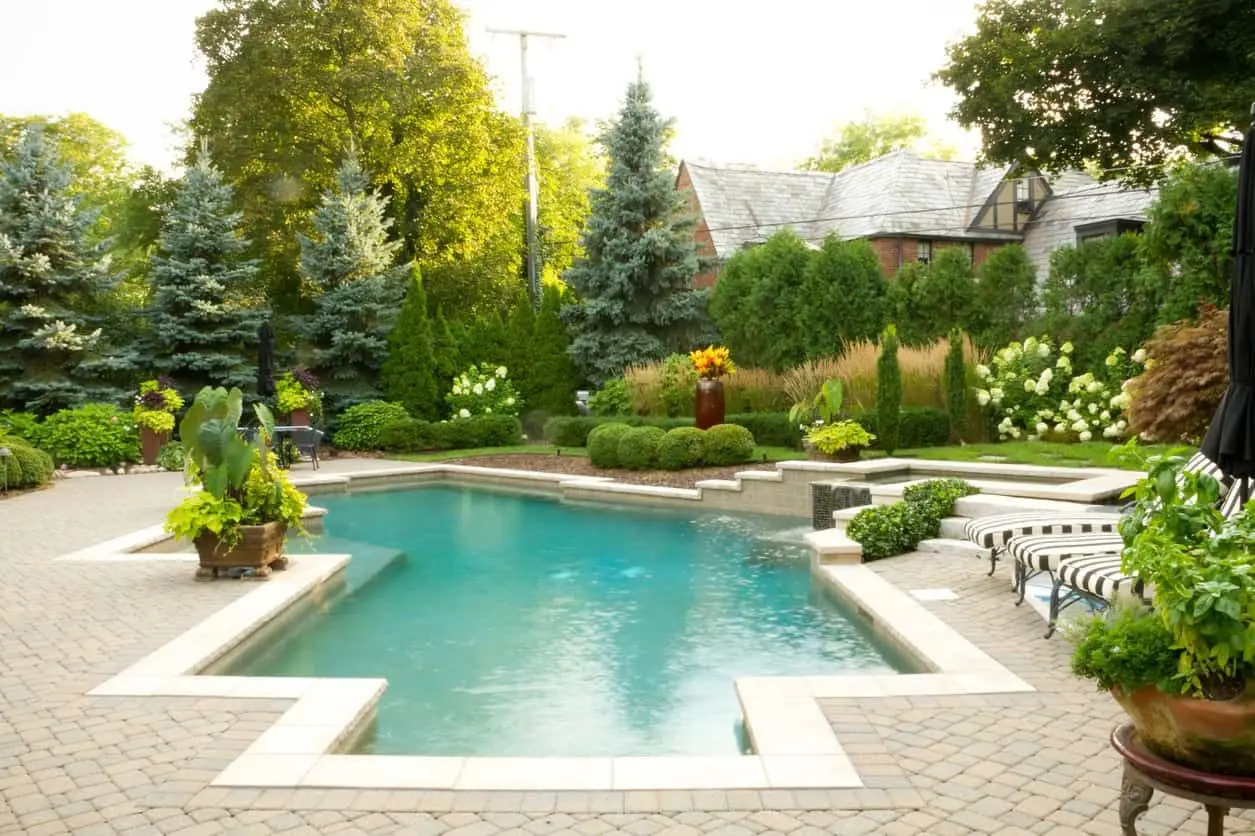
A fully covered patio offers something a pergola cannot: complete protection from both sun and rain. A solid roof structure, whether attached to the home or freestanding, creates a true outdoor room that is usable in nearly any weather. Add ceiling fans, outdoor lighting, a mounted TV, and comfortable seating, and the covered patio becomes one of the most-used spaces in the entire home.
Attached vs. Freestanding
Attached patio covers extend directly from the home’s roofline and feel like a natural extension of the interior living space. Freestanding covers can be positioned anywhere in the yard, offering more flexibility in layout. The right choice depends on your backyard’s configuration, how you plan to use the space, and what integrates best with the home’s architecture.
Fire Features: Ambiance and Extended Evening Use
Fire Pits
A fire pit near the pool creates a natural gathering point when the sun goes down. It extends the hours your backyard gets used, adds warmth on cooler nights, and creates an atmosphere that is genuinely difficult to replicate with any other single feature. Gas fire pits offer convenience and low maintenance. Wood-burning options provide a more traditional, sensory experience.
Fire Bowls and Fire Walls
For a more architectural approach, fire bowls mounted on pedestals or integrated fire walls create a dramatic visual statement, particularly when positioned near water. The combination of fire and water is one of the defining looks of a well-designed outdoor space, and one we design regularly for clients who want their backyard to feel like something genuinely special.
Outdoor Kitchens and Dining
Keep the Experience Outside
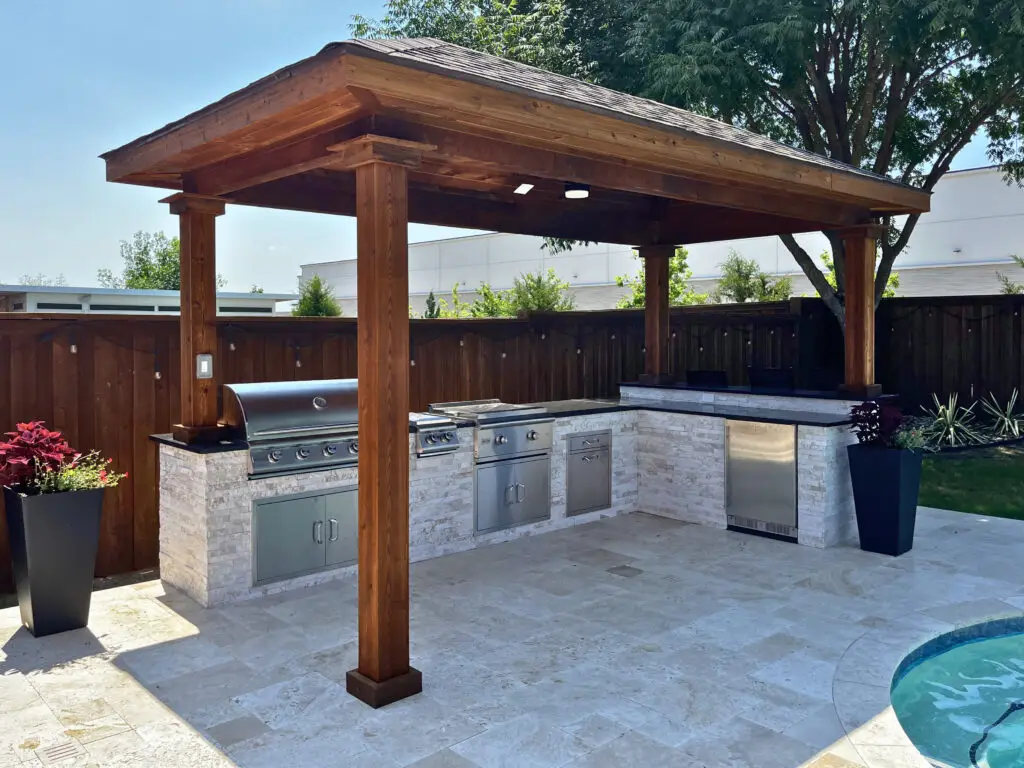
When the backyard is where your family and guests are spending their time, the kitchen should be there too. A built-in grill, counter space, a mini fridge, and a sink are the core elements of a functional outdoor kitchen. Once you have cooked and entertained outside, going back to running in and out of the house feels like a step backward.
Outdoor kitchens pair naturally with covered patios, creating a seamless outdoor living and dining space that works as well for a quiet family dinner as it does for a larger gathering.
Dining and Lounge Areas
Beyond the kitchen, thoughtfully designed seating and dining areas complete the picture. A dining table under a pergola, a lounge area with weather-resistant furniture, built-in bench seating around a fire pit, the goal is to create zones where people naturally want to settle in and stay. The best backyards are the ones guests do not want to leave.
Lighting: The Feature That Ties It All Together
An outdoor space that is only usable during daylight hours is leaving half its potential untapped. Landscape and pool lighting extends your backyard into the evening, adds safety, and creates an atmosphere after dark that is completely different from what the space looks like during the day.
Path lighting, uplighting on trees and architectural elements, string lights over dining areas, and underwater LED pool lighting all work together to create a layered effect that feels considered rather than purely functional. It is one of the highest-impact upgrades relative to its cost, and one that homeowners consistently say they wished they had added sooner.
Frequently Asked Questions
What is the difference between a pergola and a covered patio?
A pergola has an open or slatted roof structure that provides partial shade and filtered light. A covered patio has a solid roof that provides full protection from sun and rain. Pergolas tend to feel more open and architectural, while covered patios create more of a true outdoor room. Many homeowners use both in different zones of the backyard, one over the dining area and one adjacent to the pool deck, for example.
Do outdoor kitchens hold up in the Dallas climate?
Yes, when built with the right materials. Outdoor kitchens designed for the Texas climate use materials that handle heat, humidity, and the occasional cold snap: stainless steel appliances, stone or concrete countertops, and weatherproof cabinetry. A well-built outdoor kitchen requires minimal maintenance and holds up very well over the long term.
Should I plan outdoor living features at the same time as the pool build?
Whenever possible, yes. Designing the pool and surrounding outdoor living elements together produces a more cohesive result, is typically more cost-effective than adding features later, and ensures the layout works as a complete system. Even if you plan to build in phases, having the full vision planned from the start allows each phase to fit naturally into the whole.
Final Thoughts
The most memorable backyards are complete outdoor environments where every element works together and the space genuinely earns the time people spend in it. Shade makes summer bearable. Lighting makes evenings possible. Fire features make the backyard a destination. When all of it comes together well, the backyard becomes the place your family and friends actually want to be.
At Dallas Cool Pools, we design and build the full picture. If you are ready to start thinking about your backyard as a complete outdoor living space, we would love to be part of that conversation.
Contact Dallas Cool Pools today to start designing your complete backyard.